

-
By admin
-
November 20, 2026
- 0 Comment
Slip On Flange: Types, Applications, Benefits and How to Choose the Right One
Flanges play an important role in industrial piping systems by providing secure connections between pipes, valves, pumps, and other equipment. Among the different types of pipe flanges available, a slip on flange is widely used because of its simple design, easy installation, and cost-effective performance. It is commonly found in industries that require reliable pipe connections for transporting liquids, gases, steam, and other industrial materials.
A slip on flange is designed to slide over the outside diameter of a pipe before being welded into position. Its straightforward construction makes it a practical choice for several low-pressure and moderate-pressure piping applications. Industries such as oil and gas, chemical processing, water treatment, power generation, and manufacturing regularly use slip on flanges in their piping networks.
Understanding the design, types, applications, advantages, and selection criteria of slip on flanges help engineers, contractors, and industrial buyers choose suitable piping components for their operational requirements.
What Is a Slip On Flange?
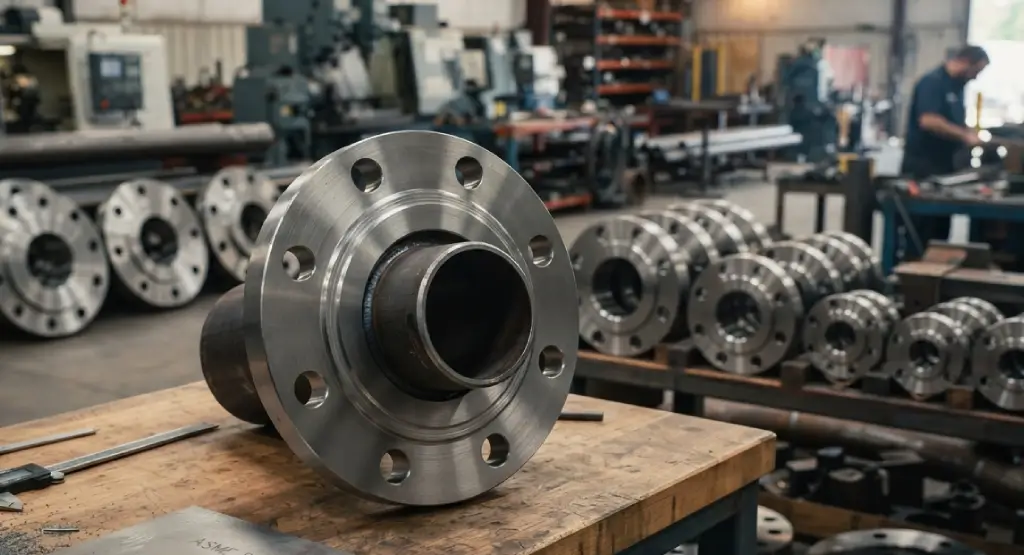
A slip on flange is a type of pipe flange that fits over the outside diameter of a pipe. Unlike weld neck flanges, which have a tapered hub, slip on flanges feature a flat design with a bore slightly larger than the pipe’s outer diameter.
The pipe is inserted through the flange, leaving enough space for welding on both the inside and outside surfaces. These welds help secure the flange to the pipe and create a reliable connection.
Slip on flanges are manufactured in different materials, sizes, pressure ratings, and dimensions to meet various industrial requirements. They are also available with different facing options to suit specific gasket and sealing arrangements.
Key characteristics of a slip on flange include:
- Simple and compact construction.
- Easy alignment with connecting pipes.
- Internal and external fillet welding.
- Availability in multiple sizes and pressure classes.
- Compatibility with different industrial piping systems.
- Cost-effective installation for suitable applications.
How Does a Slip On Flange Work?
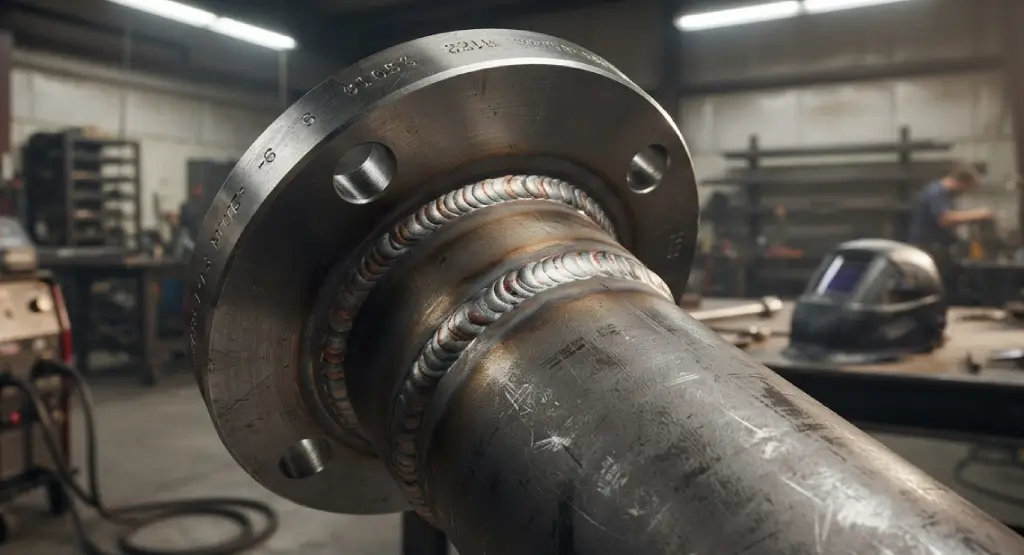
A slip on flange works by fitting around the outside of a pipe and being permanently secured through welding. Its design allows installers to position and adjust the flange before completing the welding process.
The installation generally involves the following steps:
1. Pipe preparation: The pipe surface is cleaned, measured, and prepared for installation.
2.Flange positioning: The slip on flange is placed over the pipe and positioned according to the required dimensions.
3.Alignment: The flange is aligned with the connecting equipment or another flange to ensure proper positioning.
4.Welding: Welds are applied on the inside and outside of the flange to secure it to the pipe.
5.Inspection: The completed connection is inspected according to the applicable project specifications and quality requirements.
Once installed, the flange can be bolted to another compatible flange using suitable gaskets and fasteners. This arrangement creates a connection that allows piping equipment to be connected and disconnected when maintenance or replacement is required.
Types of Slip On Flanges
Slip on flanges are available in different configurations to accommodate various piping systems and operating conditions.
1.Raised Face Slip On Flange
A raised face slip on flange features a slightly elevated sealing surface around its bore. This raised section helps concentrate gasket compression during bolt tightening.
It is commonly used in industrial piping systems where a suitable gasket arrangement and flange connection are required.
2.Flat Face Slip On Flange
A flat face slip on flange has a completely flat contact surface. It is generally used with equipment and piping connections designed for flat-face arrangements.
These flanges are commonly considered for applications involving compatible valves, pumps, and other equipment.
3.Ring Type Joint Slip On Flange
Ring Type Joint (RTJ) flanges feature a specially machined groove that accommodates a metallic ring gasket. They are designed for specific high-pressure sealing applications.
However, the availability and suitability of RTJ configurations should be verified against the applicable flange standard and manufacturer’s specifications.
Materials Used in Slip On Flanges
The material used in manufacturing a slip on flange directly affects its strength, durability, corrosion resistance, and operating performance.
Some commonly used materials include:
Carbon Steel: Carbon steel slip on flanges are widely used in industrial piping systems because of their mechanical strength, availability, and cost-effectiveness. They are suitable for many general industrial applications.
Stainless Steel: Stainless steel flanges offer better resistance to corrosion and oxidation in suitable environments. They are commonly used in chemical processing, food processing, pharmaceutical, and water treatment industries.
Alloy Steel: Alloy steel flanges are manufactured with additional alloying elements to achieve specific mechanical and temperature-related properties. They are used in demanding industrial environments.
Duplex and Special Alloys: Duplex stainless steel and other specialised alloys are selected for applications requiring particular combinations of corrosion resistance and mechanical performance.
The correct material should always be selected based on operating temperature, pressure, fluid characteristics, corrosion exposure, and applicable engineering standards.
Applications of Slip On Flanges Across Industries

Slip on flanges are used in various industrial sectors because of their practical design and installation flexibility.
1.Oil and Gas Industry
Oil and gas facilities use flanges to connect pipelines, processing equipment, storage systems, and other components. Slip on flanges may be selected for suitable piping services depending on pressure, temperature, and project specifications.
2.Chemical Processing Industry
Chemical processing plants require piping components that can handle different industrial fluids. Stainless steel and suitable alloy slip on flanges are used where their material properties meet the process requirements.
3.Water Treatment Plants
Water treatment facilities use flange connections in water distribution pipelines, filtration systems, pumps, and treatment equipment. Slip on flanges can provide practical connections in compatible piping arrangements.
4.Power Generation Industry
Power plants use various flange types in auxiliary piping, cooling water systems, and other industrial applications. The appropriate flange depends on the operating conditions and engineering design.
5.Manufacturing Industry
Manufacturing facilities use slip on flanges in industrial machinery, process piping, compressed air systems, and fluid transportation networks.
Advantages of Using Slip On Flanges
Slip on flanges offer several benefits that make them suitable for specific industrial piping requirements.
- Easy Installation: Their design allows them to slide over the pipe, making positioning and alignment relatively straightforward.
- Cost-Effective: They can be an economical option for suitable applications compared with certain other flange designs.
- Simple Construction: Their straightforward design makes them widely available in different dimensions and specifications.
- Flexible Positioning: Installers can adjust the flange position before completing the welding process.
- Wide Material Availability: They are manufactured in carbon steel, stainless steel, alloy steel, and other materials.
- Multiple Applications: They are used across several industries for compatible pressure and temperature conditions.
However, slip on flanges are not suitable for every application. Their selection must consider the pressure, temperature, fatigue loading, welding requirements, and relevant piping design standards.
Slip On Flange vs Weld Neck Flange: What Is the Difference?
Slip on flanges and weld neck flanges are two commonly used flange types, but they have different designs and performance characteristics.
| Parameter | Slip On Flange | Weld Neck Flange |
|---|---|---|
| Design | Flat design with a central bore | Tapered hub design |
| Installation | Slides over the pipe | Butt-welded to the pipe |
| Welding | Inside and outside fillet welds | Single butt weld |
| Alignment | Relatively easy | Requires accurate preparation |
| Cost | Generally economical | Generally higher |
| Applications | Suitable for specified moderate-duty services | Suitable for demanding piping applications |
The choice between these flange types depends on the piping system’s engineering requirements, operating conditions, and applicable standards.
Important Factors to Consider When Choosing a Slip On Flange
Selecting the right slip on flange is essential for maintaining piping system reliability and connection integrity.
Consider the following factors before purchasing:
1.Flange Size: Check the nominal pipe size and ensure that the flange dimensions match the piping system.
2.Pressure Rating: Select the correct pressure class based on the design pressure and applicable standards.
3.Material Grade: Choose carbon steel, stainless steel, or alloy steel according to the operating environment.
4.Temperature Requirements: Verify that the material and flange rating are suitable for the operating temperature.
5.Flange Facing: Select the appropriate raised face, flat face, or other specified facing arrangement.
6.Manufacturing Standards: Check compliance with relevant standards such as ASME B16.5, where applicable.
7.Quality Inspection: Verify material traceability, dimensional accuracy, welding requirements, and inspection documentation.
Working with an experienced flange manufacturer helps ensure that the supplied products meet the technical and quality requirements of the project.
Why Choose MJ Forgings for Industrial Flanges?
Choosing a dependable flange manufacturer is important for industrial buyers, engineering companies, contractors, and piping solution providers.
MJ Forgings focuses on industrial forging and flange manufacturing requirements, offering solutions for applications across different industrial sectors.
When sourcing slip on flanges, buyers should evaluate manufacturing capabilities, material specifications, dimensional accuracy, applicable industry standards, and quality assurance processes.
A reliable manufacturing partner can help businesses identify suitable flange specifications for their piping projects while maintaining consistency in product quality and performance.
Whether the requirement involves carbon steel flanges, stainless steel flanges, or other industrial flange products, selecting the right manufacturer is an important step towards building dependable piping systems.
Frequently Asked Questions (FAQs)
1. What is a slip on flange used for?
A slip on flange is used to connect pipes with valves, pumps, equipment, and other piping components. It slides over the pipe and is secured through internal and external fillet welding.
2. What materials are used to manufacture slip on flanges?
Slip on flanges are commonly manufactured using carbon steel, stainless steel, alloy steel, duplex stainless steel, and other specialised materials.
3. What are the advantages of slip on flanges?
The main advantages include easy installation, simple construction, flexible positioning, wide material availability, and cost-effectiveness for suitable applications.
4. What is the difference between a slip on flange and a weld neck flange?
A slip on flange slides over the pipe and is secured with fillet welds, whereas a weld neck flange features a tapered hub and is connected through butt welding.
5. Which standard is used for slip on flanges?
ASME B16.5 is a commonly used standard covering pipe flanges and flanged fittings within its specified size and pressure-class scope. Other standards may apply depending on the project.
6. Are slip on flanges suitable for high-pressure applications?
Their suitability depends on the pressure class, material, temperature, piping design, and applicable engineering requirements. Weld neck flanges may be preferred for certain demanding services.
Slip on flanges are practical industrial piping components known for their simple construction, convenient installation, and cost-effective design. They are used across industries such as oil and gas, chemical processing, water treatment, power generation, and manufacturing.
Understanding their types, materials, applications, and selection criteria helps industrial buyers and engineers choose the right flange for their specific requirements. By considering pressure ratings, material grades, dimensions, and manufacturing standards, businesses can select suitable slip on flanges for reliable piping connections.
MJ Forgings aims to support industrial flange requirements with manufacturing solutions suited to diverse engineering and piping applications.