

-
By admin
-
October 9, 2026
- 0 Comment
Carbon Steel Pipes: Types, Applications, Benefits and Selection Guide
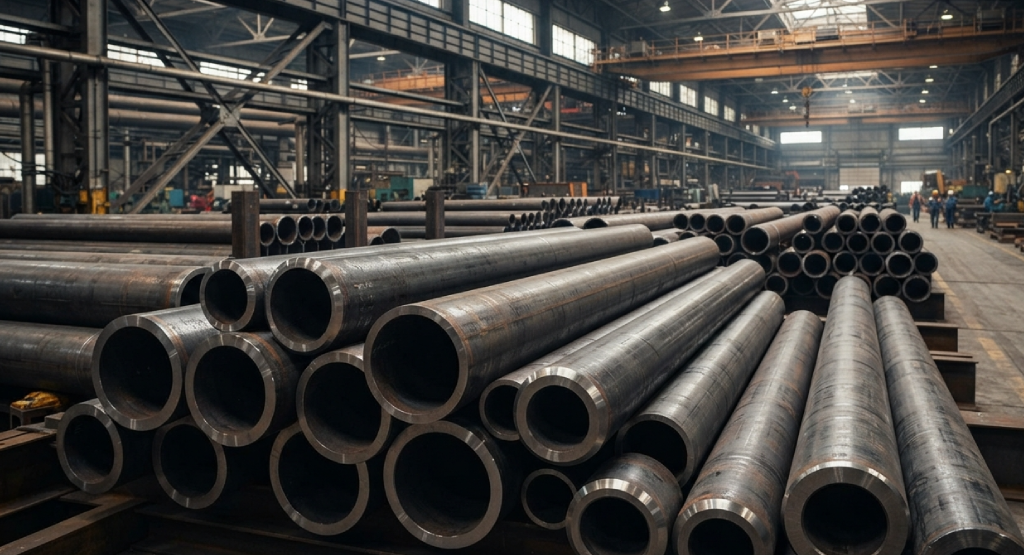
Carbon steel pipes are widely used across industries for transporting fluids, gases, steam, oil, and other materials. Their combination of strength, durability, versatility, and cost-effectiveness makes them an important choice for industrial piping systems, construction projects, infrastructure, and energy applications.
For businesses sourcing industrial piping products, understanding the types, applications, grades, manufacturing methods, and selection factors of carbon steel pipes can help ensure the right pipe is chosen for each project.
What Are Carbon Steel Pipes?
Carbon steel pipes are pipes manufactured primarily from iron and carbon, with carbon serving as the principal alloying element. Depending on the carbon content and manufacturing specifications, these pipes can offer different levels of strength, hardness, toughness, and weldability.
Carbon steel pipes are available in various sizes, wall thicknesses, grades, and specifications. They can be manufactured as seamless or welded pipes, depending on the intended application and required performance.
The relatively simple material composition of carbon steel makes these pipes practical for many industrial applications where high strength and reliable performance are required without the higher material cost associated with some alloyed steels.
What Are the Main Types of Carbon Steel Pipes?
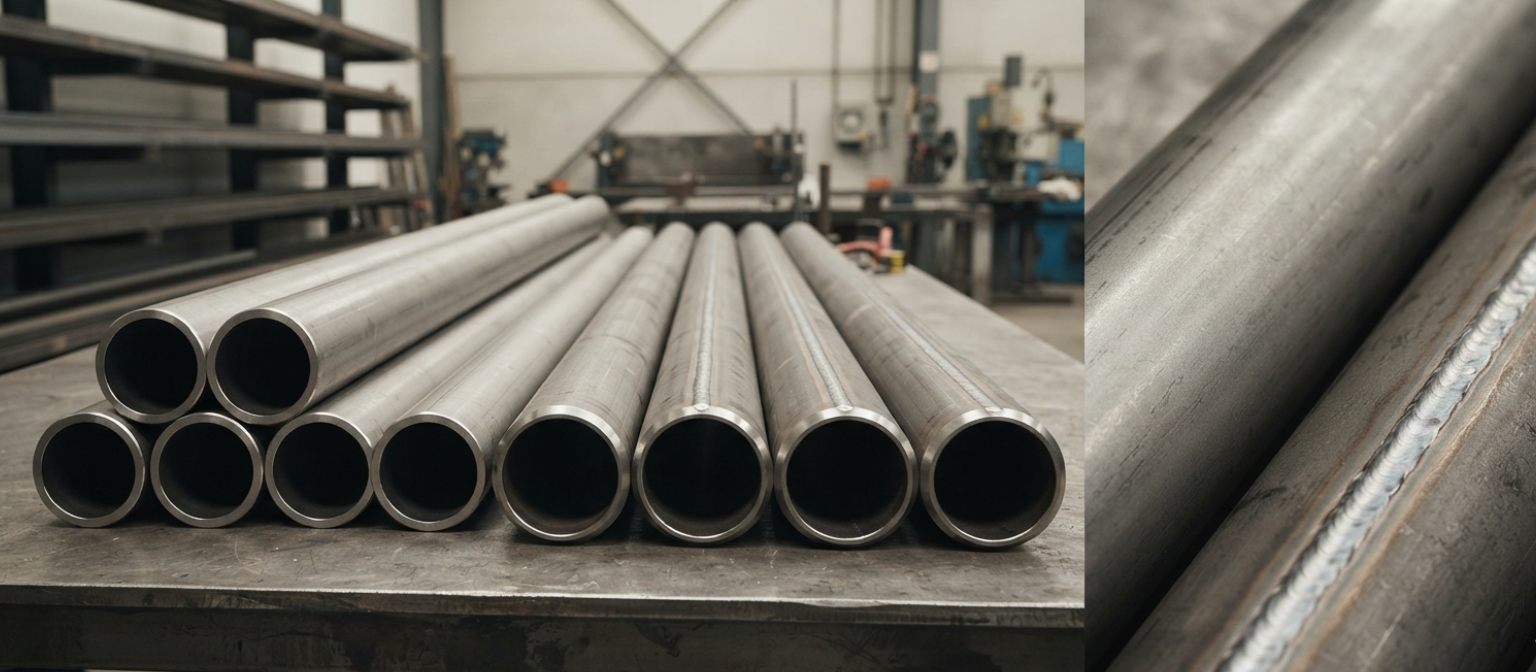
Carbon steel pipes can generally be classified according to their manufacturing process and carbon content.
1. Seamless Carbon Steel Pipes
Seamless carbon steel pipes are manufactured without a welded seam. They are produced from a solid steel billet that is heated and formed into a hollow tube.
Their uniform construction and ability to handle demanding operating conditions make seamless pipes suitable for applications involving high pressure, elevated temperatures, and critical industrial services.
2. Welded Carbon Steel Pipes
Welded carbon steel pipes are manufactured by forming steel plates, sheets, or coils into a cylindrical shape and joining the edges through a welding process.
They are available in a broad range of sizes and can be an economical solution for applications where seamless construction is not required.
3. Low Carbon Steel Pipes
Low carbon steel pipes contain a relatively low percentage of carbon. They generally offer good weldability, formability, and ease of fabrication.
These pipes are commonly used in structural, water, construction, and general industrial applications.
4. Medium Carbon Steel Pipes
Medium carbon steel has a higher carbon content than low carbon steel and can provide increased strength and hardness. The appropriate grade depends on the mechanical and operational requirements of the application.
5. High Carbon Steel Pipes
High carbon steel contains a higher carbon percentage and can provide greater hardness and strength. However, its reduced ductility and weldability mean that material selection should be based carefully on operating requirements.
Where Are Carbon Steel Pipes Used?
Carbon steel pipes are used in numerous industries because of their strength and versatility. Common applications include:
- Oil and gas pipelines
- Petrochemical plants
- Power generation facilities
- Water transportation systems
- Construction and infrastructure
- Chemical processing facilities
- Industrial manufacturing plants
- Boiler and pressure-related applications
- Structural applications
- HVAC and utility systems
- Compressed air systems
- Steam transportation
- Fire protection systems
The appropriate carbon steel pipe grade, dimensions, manufacturing method, and applicable standard should always be selected according to the project’s technical requirements.
Why Are Carbon Steel Pipes Widely Used?
Several characteristics contribute to the continued demand for carbon steel pipes.
High Strength
Carbon steel can provide strong mechanical performance, making it suitable for demanding industrial environments and applications where structural integrity is important.
Durability
Properly specified and maintained carbon steel pipes can provide long service life. Their performance depends on factors such as material grade, operating conditions, temperature, pressure, corrosion exposure, and maintenance.
Cost-Effectiveness
Carbon steel is often considered a practical material for industrial piping because it can provide a useful balance between performance and cost.
Versatility
Carbon steel pipes are available in different grades, dimensions, wall thicknesses, and manufacturing configurations. This allows them to be specified for diverse applications.
Fabrication and Welding
Many carbon steel grades offer good machinability and weldability. This can simplify fabrication, installation, and modification of piping systems when the appropriate grade and welding procedures are used.
Carbon Steel Pipes vs Stainless Steel Pipes
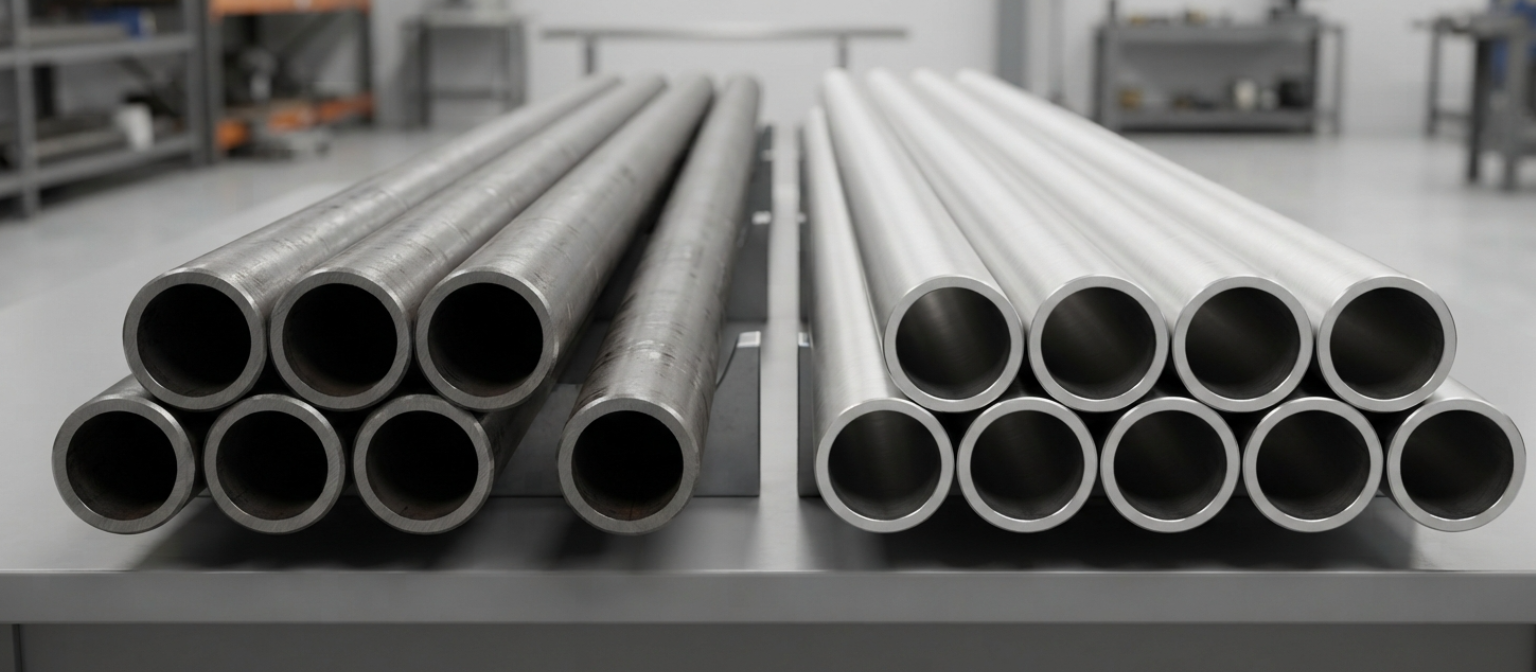
Carbon steel and stainless-steel pipes serve different application requirements.
Carbon steel generally offers high strength and cost efficiency, making it suitable for many industrial and structural applications. Stainless steel, on the other hand, contains chromium and offers enhanced resistance to corrosion and oxidation.
The choice between carbon steel and stainless steel depends on factors such as:
- Corrosion exposure
- Temperature
- Pressure
- Fluid characteristics
- Mechanical requirements
- Project budget
- Maintenance conditions
- Applicable standards
For environments with significant corrosion risk, stainless steel or another corrosion-resistant material may be more appropriate. For many general industrial applications, carbon steel can provide a practical combination of strength and cost.
How Are Carbon Steel Pipes Manufactured?
The manufacturing process depends on whether the pipe is seamless or welded.
For seamless pipes, steel billets are heated and pierced to create a hollow section. The hollow tube is then processed to achieve the required dimensions, wall thickness, surface finish, and mechanical properties.
Welded pipes typically begin with steel plate or coil. The material is formed into a cylindrical shape, and the edges are joined using an appropriate welding process. Subsequent processes may include inspection, sizing, heat treatment, finishing, and testing.
Quality control is an important part of pipe manufacturing. Depending on the specification and application, testing may include dimensional inspection, mechanical testing, chemical analysis, hydrostatic testing, and non-destructive examination.
How Do You Select the Right Carbon Steel Pipe?
Selecting the correct carbon steel pipe requires consideration of the complete operating environment rather than focusing only on pipe size.
Key factors include:
Application: Determine whether the pipe will be used for oil, gas, water, steam, structural purposes, or another service.
Pressure and temperature: Operating pressure and temperature influence the required grade and wall thickness.
Pipe dimensions: Consider outside diameter, nominal pipe size, wall thickness, and required length.
Material grade: Select a grade that meets the required chemical and mechanical properties.
Manufacturing method: Decide whether seamless or welded construction is appropriate for the application.
Standards and specifications: Ensure the pipe meets the required national, international, industry, or project-specific standard.
Corrosion conditions: Evaluate whether internal or external corrosion protection is required.
Inspection requirements: Critical applications may require additional testing, certification, or inspection documentation.
What Standards Apply to Carbon Steel Pipes?
Carbon steel pipes can be manufactured according to different standards depending on their intended application. Common specifications may include standards from organizations such as ASTM, ASME, API, and other national or international bodies.
The required standard should be determined by the application, engineering specification, industry, and project requirements. Buyers should confirm the exact grade, dimensions, testing requirements, and certification requirements before placing an order.
Why Choose a Reliable Carbon Steel Pipe Supplier?
The quality and consistency of carbon steel pipes can directly affect the reliability of an industrial piping system. A reliable supplier should be able to provide appropriate material specifications, consistent dimensions, quality documentation, testing information, and technical support where required.
For industrial buyers, supplier evaluation should consider manufacturing capabilities, quality-control processes, product range, inspection procedures, certifications, delivery capabilities, and experience serving the relevant industry.
Carbon Steel Pipes for Industrial Applications
Carbon steel pipes remain an important component of modern industrial infrastructure. Their strength, versatility, availability in different specifications, and cost-effective characteristics make them suitable for applications ranging from construction and utilities to energy and process industries.
MJ Forgings can support industrial requirements with carbon steel piping solutions based on project specifications and application needs. Selecting the appropriate grade, dimensions, manufacturing process, and applicable standard is essential for achieving reliable performance.
Whether the requirement involves seamless or welded construction, industrial piping, structural applications, or specialized project specifications, carbon steel pipes should be selected based on engineering requirements and operating conditions.
Frequently Asked Questions About Carbon Steel Pipes
What are carbon steel pipes used for?
Carbon steel pipes are used for transporting water, oil, gas, steam, and other fluids, as well as for structural and industrial applications.
Are carbon steel pipes strong?
Yes. Carbon steel pipes can provide high mechanical strength and durability, depending on the grade, dimensions, manufacturing method, and operating conditions.
What is the difference between seamless and welded carbon steel pipes?
Seamless pipes are manufactured without a welded seam, while welded pipes are formed from steel material and joined along a seam. The appropriate type depends on the application and specification.
Are carbon steel pipes suitable for high-pressure applications?
Certain carbon steel pipe grades and configurations are designed for high-pressure service. The pipe must be selected according to the required pressure, temperature, grade, wall thickness, and applicable standard.
How do I choose carbon steel pipes for an industrial project?
Consider the application, pressure, temperature, fluid characteristics, pipe dimensions, material grade, manufacturing method, corrosion conditions, applicable standards, and inspection requirements.
Are carbon steel pipes corrosion resistant?
Carbon steel can be susceptible to corrosion, particularly in moisture-rich or corrosive environments. Suitable coatings, protection systems, material selection, and maintenance may be required depending on the application.
What is the difference between carbon steel and stainless steel pipes?
Carbon steel generally focuses on strength and cost efficiency, while stainless steel provides greater resistance to corrosion because of its chromium content. The right choice depends on the operating environment and project requirements.