

-
By admin
-
September 28, 2026
- 0 Comment
Carbon Steel Flanges: Types, Applications, Benefits and Selection Guide
Carbon steel flanges are essential piping components used to connect pipes, valves, pumps, equipment and other components in industrial piping systems. Designed to create secure and serviceable connections, carbon steel flanges are widely used across industries where strength, durability and reliable performance are important.
For industries such as oil and gas, petrochemicals, power generation, water treatment, construction and heavy engineering, selecting the right flange is important for maintaining piping system integrity. The appropriate flange depends on factors such as pressure rating, temperature, pipe dimensions, material grade, connection type and operating environment.
What Are Carbon Steel Flanges?
Carbon steel flanges are mechanical components manufactured primarily from carbon steel and used to connect sections of piping or attach pipes to equipment. A flange generally has a flat or raised surface with bolt holes that allow it to be securely connected to another flanged component.
A gasket is commonly placed between two flange faces to help create a leak-resistant joint. Bolts and nuts provide the required clamping force to maintain the connection during operation.
Carbon steel is commonly selected for applications where high mechanical strength, durability and cost efficiency are required.
Why Are Carbon Steel Flanges Used in Piping Systems?
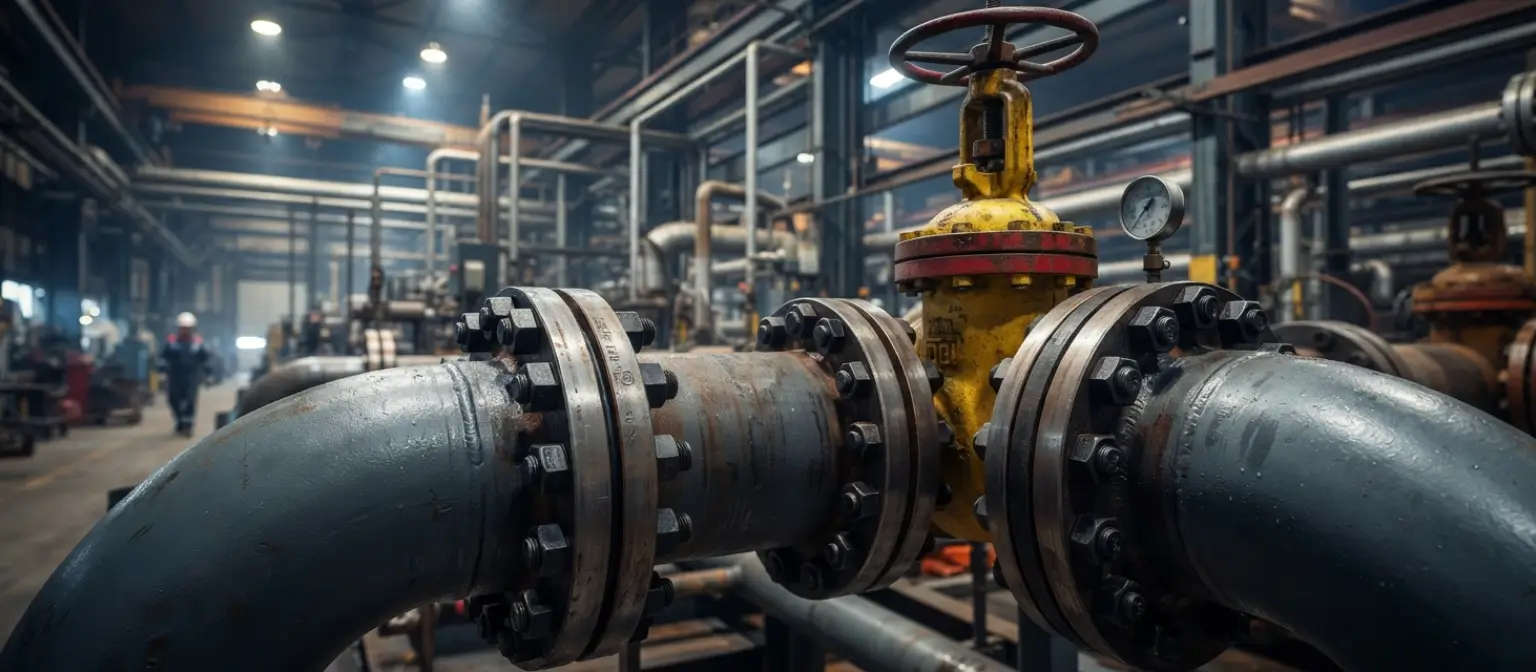
Carbon steel flanges provide several functional advantages for industrial piping applications.
High mechanical strength: Carbon steel can provide the strength required for demanding piping environments.
Durability: Properly manufactured carbon steel flanges can withstand mechanical loads and operational stresses.
Reliable connections: Bolted flange connections provide secure joints while allowing equipment and piping sections to be disconnected when required.
Cost efficiency: Compared with some higher-alloy materials, carbon steel can provide a practical solution for many general industrial applications.
Maintenance convenience: Flanged connections can be dismantled more easily than permanent welded connections, which can simplify inspection, maintenance and replacement.
Common Types of Carbon Steel Flanges
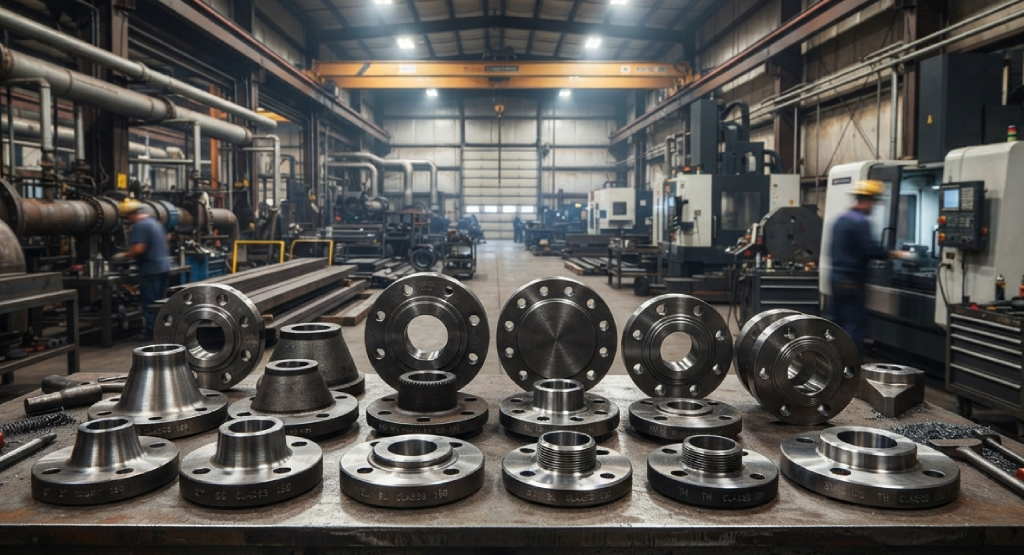
Different piping applications require different flange configurations. Some commonly used types include:
Weld Neck Flanges
Weld neck flanges are designed with a long-tapered hub and are typically butt-welded to the pipe. Their configuration provides a strong connection and can be suitable for high-pressure and high-temperature applications.
Slip-On Flanges
Slip-on flanges are designed to slide over the pipe before being welded into position. They are commonly used in applications where installation requirements and operating conditions make this configuration suitable.
Blind Flanges
Blind flanges do not have a central bore. They are used to close the end of a piping system, nozzle or vessel opening. Blind flanges can also facilitate future access to sections of a piping system.
Socket Weld Flanges
Socket weld flanges have a socket into which the pipe is inserted before welding. They are commonly used for smaller-diameter piping systems and applications requiring a compact connection.
Threaded Flanges
Threaded flanges feature internal threads that allow them to connect to externally threaded pipes without welding. They can be useful where welding is undesirable or impractical.
Lap Joint Flanges
Lap joint flanges are generally used together with stub ends. They can be beneficial in systems where frequent dismantling or alignment adjustments are required.
Applications of Carbon Steel Flanges
Carbon steel flanges are used in a wide range of industrial sectors because of their versatility and mechanical properties.
Oil and Gas Industry
Pipelines, processing facilities and associated equipment often require flanged connections for transporting and processing fluids. Carbon steel flanges can be used in suitable pressure and temperature applications within these facilities.
Petrochemical Plants
Petrochemical processing systems contain extensive networks of pipes, valves and equipment. Flanges provide detachable connections that can support maintenance and equipment servicing.
Power Plants
Power generation facilities use piping systems for water, steam, fuel and other process fluids. Appropriate carbon steel flange grades and pressure classes can be selected according to the operating requirements.
Water Treatment
Water treatment and distribution systems use flanged connections to join pipes, valves, pumps and other equipment.
Chemical Processing
Chemical processing plants require carefully selected materials based on the fluid, temperature, pressure and corrosion conditions. Carbon steel flanges may be suitable for specific services where the material is compatible with the application.
Construction and Engineering
Industrial construction projects frequently use flanges in piping assemblies, equipment connections and utility systems.
How to Select the Right Carbon Steel Flange

Choosing a carbon steel flange should involve more than simply matching the pipe diameter. Several technical factors should be evaluated.
- Pipe size: The flange dimensions must correspond with the piping system.
- Pressure rating: The flange pressure class should be suitable for the system’s maximum operating pressure.
- Temperature: Operating and design temperatures influence material selection and flange performance.
- Material grade: The appropriate carbon steel grade should be selected according to applicable specifications and service conditions.
- Flange face: Raised face, flat face and other configurations may be selected based on the mating component and application requirements.
- Connection type: Weld neck, slip-on, blind, socket weld, threaded and lap joint configurations serve different installation requirements.
- Applicable standards: Flanges should be manufactured and supplied according to the relevant industry specification or customer requirements.
- Operating environment: Pressure, temperature, fluid characteristics, corrosion conditions and mechanical loads should all be considered before final selection.
Carbon Steel Flanges and Manufacturing Quality
Manufacturing quality is an important consideration when sourcing carbon steel flanges for industrial applications. Dimensional accuracy, material traceability, surface condition, machining quality and inspection procedures can influence the reliability of the finished component.
A professional manufacturer or supplier should be able to provide relevant material documentation and product information according to project requirements. Depending on the application, customers may also require inspection documentation, dimensional inspection and applicable testing.
For critical piping systems, procurement teams should clearly communicate specifications, dimensions, pressure class, material grade, applicable standards and quantity requirements to the manufacturer or supplier.
Carbon Steel Flanges vs Other Flange Materials
Carbon steel is only one material option available for flange manufacturing. Stainless steel flanges are often selected when enhanced corrosion resistance is required, while alloy steel may be considered for specific high-temperature or demanding applications.
The choice should therefore be based on actual operating conditions rather than material preference alone. Factors such as pressure, temperature, fluid composition, corrosion exposure, mechanical requirements and project specifications should determine the appropriate material.
Benefits of Choosing the Correct Carbon Steel Flanges
Selecting an appropriately designed and specified flange can contribute to the overall reliability of a piping system. Correct flange selection can help provide:
- Secure pipe-to-pipe and pipe-to-equipment connections
- Suitable pressure-handling capability
- Convenient access for maintenance
- Compatibility with associated piping components
- Reliable performance under specified operating conditions
- Efficient installation and replacement
- Long-term serviceability when properly selected and maintained
Why Choose MJ Forgings for Carbon Steel Flanges?
MJ Forgings can cater to industrial requirements for forged components and carbon steel products where quality, dimensional consistency and application-specific specifications are important.
For carbon steel flanges, buyers should consider factors such as manufacturing capabilities, material specifications, dimensional requirements, applicable standards, inspection procedures and documentation. MJ Forgings can work with customers to understand these requirements and provide products aligned with their project and application needs.
Whether the requirement involves standard industrial piping or a specific engineering application, clearly defining the technical specifications helps ensure that the selected carbon steel flanges are appropriate for the intended service.
Frequently Asked Questions About Carbon Steel Flanges
What are carbon steel flanges used for?
Carbon steel flanges are used to connect pipes, valves, pumps, vessels and other piping components. They provide bolted connections that can be assembled and dismantled for maintenance.
Which industries use carbon steel flanges?
Carbon steel flanges are commonly used in oil and gas, petrochemical, power generation, water treatment, chemical processing, construction and general engineering applications.
What are the main types of carbon steel flanges?
Common types include weld neck, slip-on, blind, socket weld, threaded and lap joint flanges. The appropriate type depends on the piping design and operating requirements.
How do I select carbon steel flanges?
Selection should consider pipe size, pressure rating, temperature, material grade, flange face, connection type, applicable standards and operating environment.
Are carbon steel flanges suitable for high-pressure applications?
Certain carbon steel flange designs and grades can be used for high-pressure applications when correctly specified according to the applicable pressure class, material requirements and operating conditions.
What information should be provided when ordering carbon steel flanges?
Important information can include flange type, nominal size, pressure class, material grade, applicable standard, dimensions, quantity and any specific testing or documentation requirements.
Carbon steel flanges play an important role in industrial piping systems by providing strong, detachable and serviceable connections between pipes and equipment. Their wide range of configurations allows engineers and procurement teams to select solutions according to pressure, temperature, piping dimensions and application requirements.
For reliable results, carbon steel flanges should be sourced according to clearly defined technical specifications and relevant industry standards. Working with an experienced manufacturer such as MJ Forgings can help industrial buyers address their flange requirements with greater attention to product specifications, quality and application suitability.